



Corporate branding is the practice of building and managing the reputation and identity of a company as a whole, rather than of a single product. It covers the company’s name, logo and visual identity, but also its purpose, values, culture, tone of voice and how it treats customers, employees and investors. Done well, it makes every product and touchpoint feel like one trusted business.
Key takeaways
- Corporate branding manages the identity and reputation of the whole company, not a single product.
- It speaks to customers, employees, investors and partners, so consistency across every touchpoint matters.
- Strong corporate brands align leadership vision, internal culture and external image.
- Brand architecture can be a branded house, a house of brands or an endorsed model.
- A corporate brand strategy covers mission, positioning, internal alignment, visual identity and voice.
What Is Corporate Branding?
Corporate branding encompasses much more than a cleverly placed advertisement or memorable logo. It embodies a company’s whole image, covering everything from its basic principles to its dealings with clients. While product and service branding concentrates on particular items, corporate branding aims to create a company’s overall image and identity.
Corporate branding is essentially a marketing tactic that places a brand in its proper perspective within the industry. The brand logo, values, tone, messaging, purpose, and target audience are just a few of the components that this strategy includes. It all comes down to developing a unique visual brand that sets a business apart from its rivals. A robust company brand can promote significant growth, brand loyalty, and other benefits in the modern marketing climate.
Companies can increase their influence in most areas of their business, including marketing, sales, and customer service, by using corporate branding. It is not only about a company’s appearance; it is also about how it interacts with its clientele, conducts itself in public, and relates its principles to those of its customers. Effective corporate branding connects with the target market, influencing business choices and helping the organisation stand out in a crowded field.
We’ll look at the benefits of corporate branding, the difficulties it presents, and the approaches to its implementation in the parts that follow. We’ll explore how to connect emotionally with consumers, meet market demands, and comprehend prospective clients. We’ll also go over how to create a strong corporate branding strategy, and consistent identity, and design key visual elements that align with your corporate brand.
What Are the Benefits of Corporate Branding?
The advantages are multifaceted and impactful.
- Shaping Public Perception:
A clearly defined corporate brand influences the public’s perception of your business. It takes more than just being able to recognise a logo to effectively connect your brand to certain attributes, principles, and experiences. This perception is essential for setting your brand apart from rivals and securing a special position for yourself in the market.
- Driving Growth and Loyalty:
A powerful corporate brand is a commercial strategy as opposed to only a visual or verbal representation. Effectively communicating your brand’s values can help you draw in and keep devoted clients, which will promote expansion. Consumers who connect with the message and values of your brand are more likely to return, which will help your company succeed in the long run.
- Extending Brand Influence:
Corporate branding affects sales, customer service, digital marketing, and other facets of your company. It all comes down to giving clients a logical and consistent experience throughout every touchpoint. This broad influence increases the reliability and credibility of your brand and aids in building a connection with your target market.
In the following segment, we will look at the challenges associated with corporate branding and how to navigate them effectively.
What Are the Challenges of Corporate Branding?

Corporate branding brings its own challenges, on top of the wider challenges of online branding. The main ones are listed below:
- Complexity and Scope:
Compared to product or service branding, corporate branding has a far wider application. This wider breadth may make it more difficult to manage and coordinate the brand across various goods and services offered by the same business. It is a hard undertaking to strike a balance between the specific product qualities and the overall corporate identity.
- Stakeholder Expectations:
Employees, investors, and consumers are just a few of the many stakeholders impacted by corporate branding. It can be difficult to match marketing initiatives to the attitudes and expectations of these various groups. It requires a thorough understanding of stakeholder needs as well as consistent communication of brand identity and values.
- Consistency Across Touchpoints:
Various touchpoints, including logos, packaging, employee interactions, customer service, and advertising, all serve to reflect a business brand. Keeping all of these components consistent is essential to developing a powerful brand identity. Any discrepancy has the potential to give the audience a confused impression of the brand.
- Aligning Vision, Culture, and Image:
An effective corporate brand must guarantee alignment between the organisation’s strategic vision, internal stakeholder views, and external stakeholder perceptions. Mary Jo Hatch and Majken Schultz described this as aligning vision, culture and image in their Harvard Business Review article on corporate brands. When these elements are out of alignment, it may be an indication of a failing brand and calls for serious examination and realignment.
Corporate Branding vs Product Branding: What Is the Difference?
Corporate branding and product branding work together, but they answer different questions. Here is how they compare:
| Aspect | Corporate branding | Product branding |
|---|---|---|
| Focus | The company as a whole | One product or product line |
| Audience | Customers, employees, investors, partners and the public | Buyers and users of that product |
| Timeframe | Long-term, built over years | Can change with each product’s life cycle |
| Usually owned by | The leadership team | Product and marketing teams |
| Example | Apple as a company | The iPhone as a product |
Most companies also choose a brand architecture, which decides how the corporate brand and product brands relate:
- Branded house: every product carries the company name, as with Google Search, Google Maps and Google Drive. Each launch borrows trust from the parent brand.
- House of brands: products stand on their own and the parent stays in the background, as with Procter & Gamble’s brands such as Pampers, Gillette and Head & Shoulders. This suits companies selling to very different audiences.
- Endorsed brands: a product has its own name but carries the parent as a seal of approval, as in Courtyard by Marriott.
For most small and mid-sized businesses, a branded house is the simplest and cheapest model, because every piece of marketing builds one name. A clear brand strategy should record which model you use and why.
Who Are Your Potential Customers?
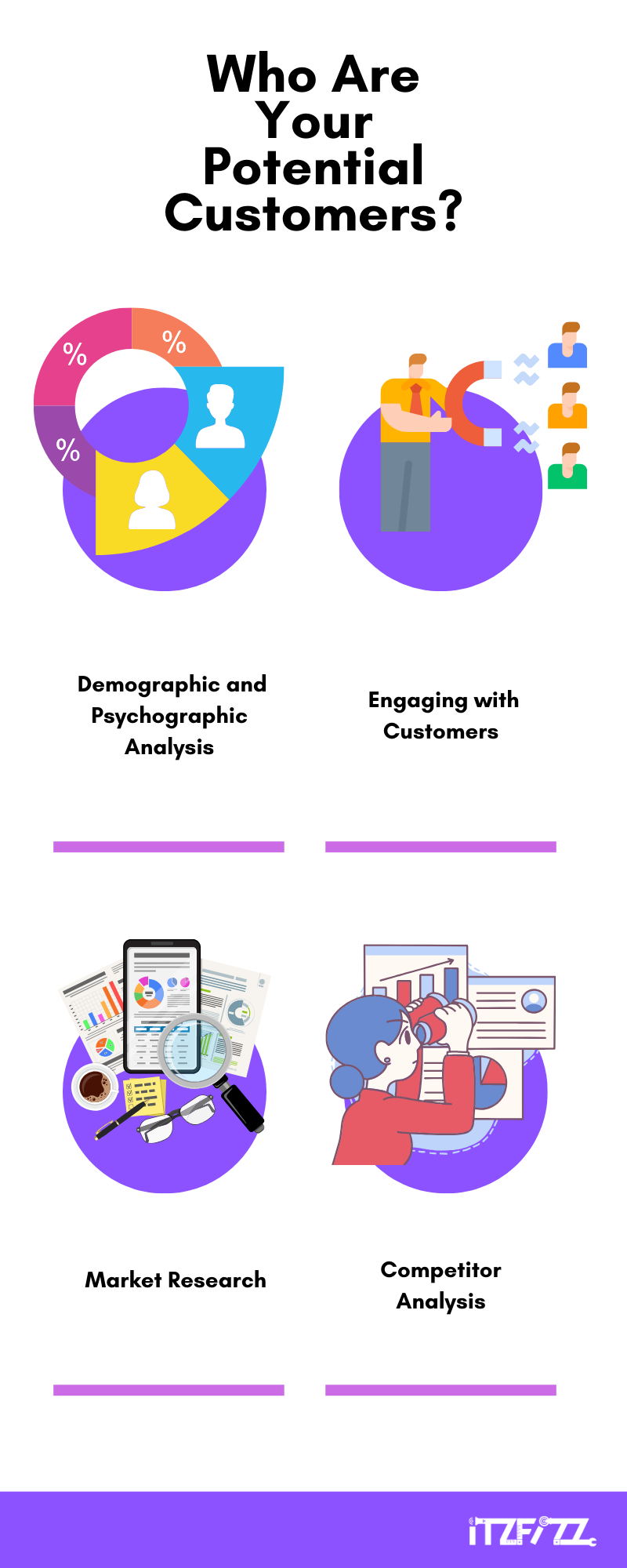
Understanding your target audience is a pivotal aspect of corporate branding. Here are key steps to identify and comprehend your potential customers:
- Demographic and Psychographic Analysis: Start by gathering data on the demographics (age, gender, location, income level) and psychographics (interests, values, lifestyle) of your potential customers. This information forms the foundation for developing a customer profile.
- Engaging with Customers: Direct engagement through surveys, social media interactions, and customer satisfaction can provide valuable insights into what your customers expect and appreciate in a brand.
- Market Research: Conduct thorough market research to understand the prevailing trends, customer preferences, and gaps in the market. This will help you tailor your branding strategy to meet the specific needs of your audience.
- Competitor Analysis: Analysing your competitors can offer insights into what works and what doesn’t in your industry. Understanding how your competitors approach their customer base can inform your marketing strategy to differentiate your brand.
Identifying your potential customers is not just about who they are but also about understanding their needs, preferences, and behaviours. This knowledge enables you to craft a branding strategy that resonates with them, fostering a deeper connection with your brand.
How Do You Identify the Needs and Demands of the Market?
To ensure your corporate branding resonates with your audience, it’s crucial to understand the specific needs and demands of the market.
- Market Analysis: Conduct a comprehensive analysis of the market to identify current trends, consumer behaviours, and gaps that your brand could fill. This involves studying market reports, industry news, and consumer behaviour studies.
- Customer Feedback: Gather feedback from existing customers about what they value in your products or services. This direct input can reveal unmet needs and preferences that your corporate branding could address.
- Value Proposition Development: Based on your understanding of the market and your customers, craft a clear value proposition. This statement should succinctly describe how your brand meets customer needs and sets itself apart from competitors.
- Adapting to Changing Trends: Markets are dynamic, and consumer preferences can shift. Regularly updating your market research and being agile in responding to new trends and demands is key to keeping your corporate branding relevant and effective.
How Do You Create an Emotional Connection With Customers?
Building an emotional bond with your customers is a powerful aspect of corporate branding.
- Brand Storytelling: Use storytelling in branding to convey your brand’s values, mission, and vision. A compelling narrative can create a strong emotional resonance with your audience, making your brand more memorable and relatable.
- Consistent Brand Voice: Develop a consistent brand voice that reflects your brand’s personality. Whether it’s inspirational, professional, or playful, this voice should be evident in all your communications and resonate with your target audience’s values and preferences.
- Customer Experience: Focus on delivering exceptional customer experiences at every touchpoint. This includes not only the quality of your products and services but also interactions through customer service, social media, and other channels.
- Community Building: Engage with your customers through social media, events, and community initiatives. Building a community around your brand fosters a deeper emotional connection and a sense of belonging among your customers.
How Do You Develop a Corporate Brand Strategy?
A well-defined corporate brand strategy is essential for aligning your corporate branding efforts with your business goals.
- Defining Your Brand’s Mission and Vision: Clearly articulate your brand’s mission and vision. This serves as the foundation of your brand strategy, guiding your decisions and actions.
- Brand positioning: Choose the way you want the market to view your brand. Identify and leverage your unique selling propositions (USPs) to differentiate your brand from competitors.
- Internal Brand Alignment: Ensure that your brand’s values and message are embraced internally. Employee understanding and support of the brand mission are crucial for delivering a consistent external brand experience.
- Integrated Marketing Communications: Develop a comprehensive marketing plan that integrates all communication channels. This ensures a unified message across different platforms, reinforcing your brand’s identity and values.
Next, we will explore crafting a unique corporate identity, a critical component of making your brand distinct and memorable.
- Logo and Visual Elements:
The logo is often the first point of contact with your brand. Ensure it’s simple, memorable, and reflective of your brand ethos.
Incorporate visual elements like shapes, and colour in branding, and typography that align with your brand personality. For instance, a tech company might opt for sleek, modern designs, while an organic brand might choose earthy tones and natural motifs.
Consistency in these visual elements across all mediums (website, packaging, marketing materials) reinforces brand recognition. - Brand Voice and Messaging:
Your brand voice should mirror the characteristics of your target audience while staying true to your brand’s values. For example, a youthful brand might use energetic and playful language, while a luxury brand might use a more sophisticated and refined tone.
Messaging should consistently communicate your brand’s unique value proposition. Whether it’s in advertising, blog posts, or social media, the core message should be cohesive and clear. - Brand Culture and Ethics:
Embed your brand’s values and ethics in every aspect of your operations. This might include sustainable practices for an eco-friendly brand or exceptional customer service for a client-centric business.
Communicate your brand’s commitment to these values externally, through marketing and CSR (corporate social responsibility) initiatives, and internally, through employee training and company policies. - Innovative Brand Experiences:
Continuously innovate in the way you present your brand. This could be through unique packaging, engaging online experiences, or immersive retail environments.
Leverage technology to enhance customer interaction with your brand, such as through AR (augmented reality) experiences, mobile phones, or personalised online services.
Each element of your corporate identity should work in harmony to create a cohesive and compelling brand image that resonates with your audience and sets you apart in the marketplace.
Colour is one of the most visible parts of that identity, so it deserves its own plan.
Establishing a Colour Scheme for Your Brand
Choosing the right colour scheme is a critical aspect of your brand’s visual identity.
- Psychology of Colours: Understand the psychology behind colours. Colours carry associations, although they vary with culture and context. For example, blue is often read as trustworthy and reliable, while green is commonly linked with growth and health.
- Brand Alignment: Select colours that align with your brand’s personality and values. A vibrant, energetic brand might choose bold and bright colours, whereas a luxury brand might opt for more subdued, elegant hues.
- Market Considerations: Consider your market and audience preferences. Find out what colours your target audience responds to the most by doing some research on them.
- Consistency Across Platforms: Ensure consistency in the use of your colour palette across all platforms and materials. This consistency contributes to the development of a powerful and identifiable brand identity.
- Adaptability: Choose a colour scheme that is versatile and adaptable across various mediums, from digital interfaces to print materials.
In the next segment, we will discuss designing visual elements for your corporate image, including logos, fonts, and imagery.
Designing Visual Elements for Your Corporate Image

Visual elements are key components of your brand’s identity:
- Logo Design: Your logo is a visual representation of your brand’s identity. It should be distinctive, memorable, and scalable to work across various mediums.
- Fonts and Typography: Choose fonts that reflect your brand’s character. For a professional look, consider clean and simple typography, while more creative brands might opt for unique or stylised fonts.
- Images and Graphics: Use images and graphics that complement your brand’s message and tone. Consistent visual styling in your imagery helps reinforce your brand identity.
- Website Design: Your website is often the first point of interaction for many customers. Ensure it is visually aligned with your brand, easy to navigate, and provides a positive user experience.
These visual elements should work together to create a cohesive and appealing corporate image, enhancing your brand’s presence in the market.
Conclusion
In conclusion, corporate branding is far more than just a logo or a marketing campaign. It’s the heartbeat of your business, influencing how potential buyers perceive and interact with your brand. From establishing a compelling brand identity to crafting a unique visual language, every aspect of corporate branding plays a pivotal role in setting your business apart in a competitive market.
If you’re looking to elevate your brand’s presence, ItzFizz Digital is here to help. Our branding team specialises in creating bespoke corporate branding strategies that resonate with your audience and align with your business goals. At ItzFizz Digital, we believe in the power of branding to transform businesses. Let us help you make your brand not just seen, but felt.