



Key takeaways
- WhatsApp marketing uses the WhatsApp Business app or Business Platform (API) to send offers, updates and support to customers who opted in.
- The free Business app suits small businesses; the Business Platform adds templates, chatbots and CRM integration for larger teams.
- Since 1 July 2025, Meta charges the Business Platform per template message, and replies within an open customer service window are free.
- WhatsApp's Business Messaging Policy requires opt-in permission before you message anyone and respect for every opt-out request.
- General-purpose AI assistants are barred from the Business API from 15 January 2026, but businesses can still use AI bots for their own customers.
- Segment contacts, mix text, media and catalogues, and track replies, clicks and conversions against clear goals.
What Is WhatsApp Marketing?
WhatsApp marketing is the use of WhatsApp to reach customers who have opted in, with offers, updates, catalogues and one-to-one support. Small businesses usually start with the free WhatsApp Business app, while larger teams use the WhatsApp Business Platform (API), which Meta has charged per template message since 1 July 2025. Either way, you need the customer’s permission before you message them.
In practice, WhatsApp marketing uses the messaging platform’s large user base to interact with clients, advertise goods and offer customer service, making it a flexible tool in the digital marketer’s toolbox.
Communicating with customers both past and present through WhatsApp is the fundamental component of social media marketing. Personalised and meaningful interactions are the foundation of this method, which goes far beyond simply sending out promotional messages. Numerous tasks are possible using the platform, like sending out updates and exclusive deals, surveying customers, and offering immediate assistance.
WhatsApp boasts billions of active users globally, demonstrating its vast reach. With this large user base, business owners have a great chance to directly and personally engage with a global audience. WhatsApp enables one-on-one chats, which is different from traditional marketing platforms and helps businesses build stronger relationships with their clients.
There’s more to WhatsApp’s marketing strategy than just sending out messages. It entails knowing who your audience is, adjusting WhatsApp messages to suit their requirements, and adding value to each exchange. With this tactic, you can make sure that your marketing initiatives are viewed as beneficial and interesting stops along the consumer journey rather than as aggressive.
What Are the Benefits of WhatsApp Marketing?
Businesses looking to increase customer interaction and brand visibility can benefit greatly from WhatsApp marketing. Here are the main advantages of WhatsApp marketing.
High Levels of Engagement
The exceptionally high interaction rates of WhatsApp marketing are among its greatest benefits. Broadcast messaging on WhatsApp has a higher opening and reading rate than email marketing or other digital communication channels. Because of the platform’s direct and intimate nature, which makes it perfect for business-to-consumer communication, it has a high open rate.
Flexible Channels of Communication
WhatsApp is a versatile communication tool that lets companies run a range of marketing campaigns.
Direct Promotions: Directly sending clients customised updates and attractive offers.
Customer Support: Responding to inquiries and providing prompt resolutions in real-time.
Customer Engagement: Using interactive tools like surveys, polls, and feedback requests to communicate with customers.
Improving the client experience
Businesses may improve the entire client experience by using WhatsApp for marketing. The platform makes it possible to communicate instantly, which promotes responsiveness and immediacy. Increased client satisfaction and customer loyalty might result from this instantaneous engagement.
An Affordable Marketing Option
The use of WhatsApp marketing is more affordable than using more conventional marketing avenues. It relies directly on client communication, doing away with the necessity for costly advertising efforts. This strategy helps companies attain a better return on investment (ROI) while also cutting expenditures.
Worldwide Reach
WhatsApp provides businesses with the chance to connect with a wide range of people across the globe because of its massive user base. This worldwide reach is especially beneficial for companies trying to increase their market share and establish connections with clients in various geographies.
Customised Promotion
Businesses can customise their internet marketing campaigns because of the platform’s one-on-one communication method. More powerful and successful marketing initiatives result from message customisation to individual tastes and behaviours.
Reliable and Safe Platform
WhatsApp is known for end-to-end encryption, which gives people confidence in the platform. Users feel more confident interacting with businesses on the platform because of this security feature.
Identifying Your Target Audience and Understanding Your Potential Customers
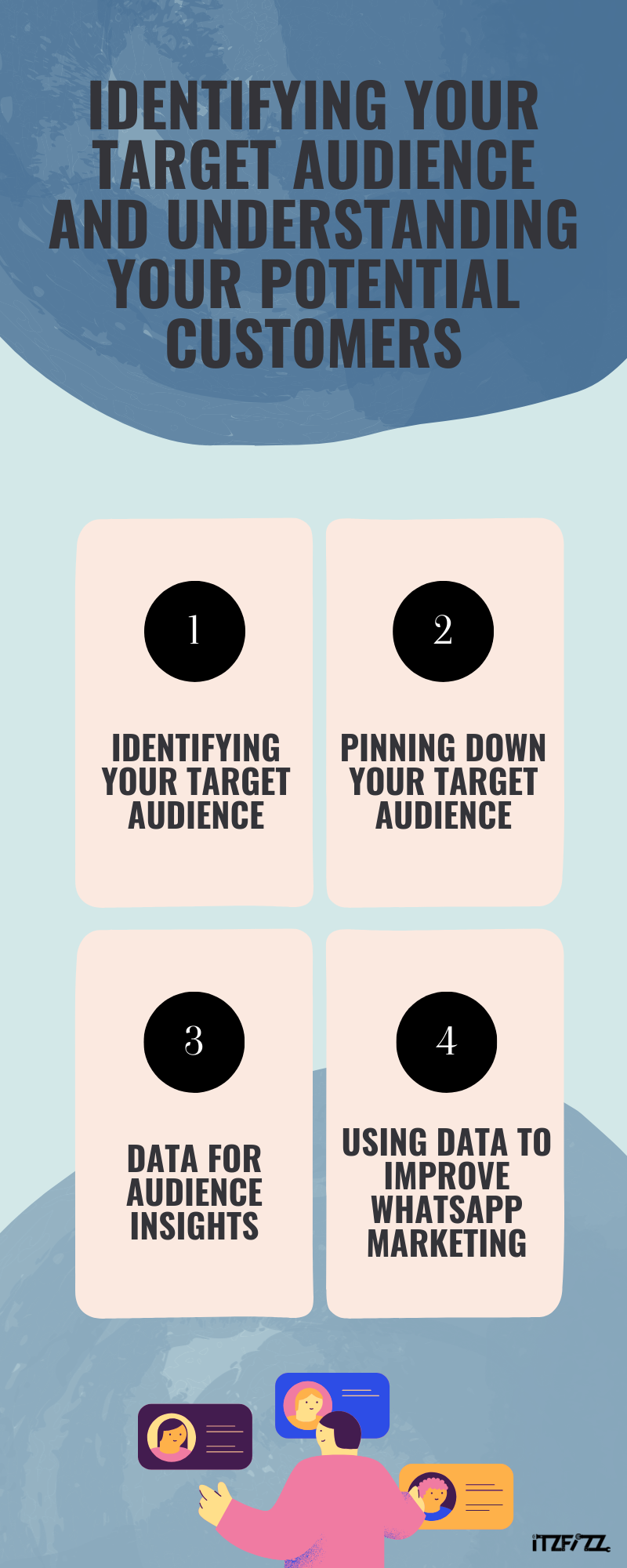
A successful WhatsApp marketing strategy hinges on identifying and understanding your target audience. This section outlines methods to analyse and comprehend your potential customer base.
- Identifying Your Target Audience
Any successful marketing campaign starts with understanding your target demographic. Here’s how to learn more about your prospective clients:
- Creation of Customer Profiles: Create thorough customer profiles that include behavioural, psychographic, and demographic characteristics. Surveys, feedback collection, and analysis of current customer data are some of the steps in this process.
- Use of analytics technologies: Make use of technologies such as Google Analytics to gain insight into the browsing habits and preferences of people who visit your website. You may learn more about the kind of material that appeals to your audience by looking at this data.
- Social Media Insights: Make use of social media platform insights to gain knowledge about the hobbies, inclinations, and demographics of your followers. These details may be representative of your larger clientele.
- Pinning Down Your Target Audience
Determining your target audience requires a mix of research and analysis. Here are some approaches to consider:
Jobs to Be Done (JTBD) Framework: This approach concentrates on comprehending the tasks or jobs that users are attempting to complete to use your product or service. It entails probing them about the values they uphold and the results they hope to achieve.
Interviews and Surveys with Current Consumers: Asking your present consumers about their preferences and reasons for selecting your product or service might yield important insights.
- Data for Audience Insights
Data-Driven Segmentation: Segment your audience according to demographics, behaviour, and past purchases by utilising information from social media sites, Google Analytics, and your CRM.
Analysing Customer Feedback: To learn more about your customer’s requirements and preferences, examine evaluations and feedback from them regularly. You can use this input to inform the development of your content and marketing plan.
- Using data to improve WhatsApp marketing
After you have a firm grasp on your target market, include the following knowledge in your WhatsApp marketing strategy:
Tailored Messaging: Create bulk messages that effectively connect with your audience by utilising the information gleaned from your audience analysis. Adjust your message to suit their tastes and habits.
Content Relevance: Make sure the material you post on WhatsApp is helpful and pertinent to your audience. This could contain announcements and special offers for new products.
How Do You Create a WhatsApp Marketing Strategy?
Crafting a strategic approach for WhatsApp marketing is essential for its effectiveness. This part of the blog will guide you through the key steps to developing a comprehensive marketing strategy on WhatsApp.
Establish your objectives and KPIs (key performance indicators).
- Establishing Specific Goals: To start, decide what you hope to accomplish with your WhatsApp marketing campaigns. This can involve raising sales, enhancing customer service, or raising brand awareness.
- Identifying KPIs: Choose the measurements that will enable you to assess your strategy’s effectiveness. Metrics like engagement rates, customer retention rates, and conversion rates may be part of this.
Determine which market to aim for.
- Audience Analysis: Determine the precise market categories you wish to target with your WhatsApp marketing by utilising the data acquired from your audience research.
- Content Tailoring: To ensure greater relevance and engagement, adapt your messaging and content approach to these target segments.
Make use of the business app for WhatsApp.
- Making Use of Business Features: The WhatsApp Business App offers features that are essential for efficient marketing, such as business profiles, product catalogues, automated responses, and chat organisation.
- Customer Interaction: Make use of these technologies to offer a smooth and efficient customer experience by streamlining interactions.
Construct a persona for your company.
Establishing a Brand Voice: Develop a persona for your company that resonates with your intended audience. This persona should reflect the attributes, convictions, and dispositions that your brand embodies and will dictate the style and tone of your WhatsApp messages.
Create and sort contact lists.
- Contact Acquisition: To create your contact list, use a variety of techniques, such as subscription forms on your website.
- Segmentation for Personalisation: To send more individualised and focused messages, divide this list into segments according to client behaviour, preferences, and past purchases.
Formulate a communication plan.
- Content Strategy: Make a list of the messages you want to communicate, including instructional, amusing, and promotional content.
- Multimedia Integration: To boost engagement, supplement your broadcast messages with pertinent multimedia content, such as pictures and videos.
Provide top-notch customer support.
- Using Chatbots: Use chatbots to instantly respond to frequently asked questions, increasing the effectiveness of customer care.
- Real-Time Support: Provide customers with timely and efficient real-time support by utilising WhatsApp to address their difficulties.
Always keep an eye on things and make adjustments.
- Performance Tracking: Keep a close eye on how your WhatsApp marketing initiatives are doing in comparison to your KPIs.
- Strategy Adjustment: Be ready to make changes to your plan in response to consumer feedback and performance statistics.
Setting Up Quick Automated Responses
One of the key components of an effective WhatsApp marketing strategy is the use of quick, automated responses. These responses not only enhance customer interaction but also streamline the communication process.
- Understanding Quick Automated Responses
Automated greetings and replies provide a useful tool for welcoming new customers and quickly addressing common inquiries. This feature aids in maintaining consistent communication with your audience and enhances efficiency in customer support.
- Implementing Automated Responses in WhatsApp Business
In the WhatsApp Business app, users can create automated messages, such as greetings and quick replies, to handle commonly asked questions. It is crucial to customise these responses to align with your brand and effectively address customer inquiries.
- Benefits of Quick Automated Responses
Automated responses enhance customer service by providing immediate answers, ensuring availability 24/7 for your business to cater to customers even outside of regular business hours.
Marketing Efforts and Active Users
Maximising your digital marketing efforts and increasing your active user base on WhatsApp can significantly enhance the effectiveness of your marketing campaigns.
- Maximise your marketing efforts.
Develop a content strategy that includes a variety of promotional, informative, and engaging content that is tailored to the interests of your audience. Incorporate multimedia elements such as images and videos to enhance the appeal and shareability of your content. Ensure consistent messaging by finding a balance in how frequently you communicate with users, providing them with information without overwhelming them.
- Increasing Your Active User Base
To acquire new users, one can implement strategies like promoting the WhatsApp channel on other platforms and utilising opt-in methods that comply with WhatsApp’s rules. Additionally, engaging users with interactive content, timely offers, and personalised messaging can encourage active participation.
- Crafting effective promotional messages
Message Clarity and Conciseness: Ensure clear and concise messages that effectively convey your offer or information. Personalisation: Customise messages based on the interests and behaviours of your target audience to enhance relevance and engagement.
Mapping Out the Customer Journey
- Customer Journey Stages: Understand the various stages of the customer journey, from awareness to consideration, and tailor your messaging accordingly.
- Customer Interaction: Use WhatsApp to facilitate different types of interactions at each stage of the journey, such as providing product information, answering queries, and providing post-purchase support.
Customer Satisfaction: Monitor interactions to ensure customer satisfaction and address any issues that may arise promptly.
What Types of Messages Can You Send on WhatsApp?

WhatsApp supports several message formats, and each suits a different marketing job. Here are the main types:
- Text Messages: Simple and basic, text messages work well for announcements, fast updates, and one-on-one conversations in WhatsApp marketing.
- Media Messages: Photos, audio clips and short videos make messages more captivating and let products speak for themselves.
- Video Messages: Businesses may use video messages to display products, share information, and create immersive experiences on WhatsApp by utilising visual storytelling.
- Voice messages: Voice notes are an efficient way to provide detailed information or humanise client contacts. They offer a personal touch and add credibility.
- Document Sharing: Companies use WhatsApp to immediately share documents, PDFs, and catalogues to disseminate comprehensive information or marketing materials.
- Status Updates: Businesses use WhatsApp’s status function to offer promotions and updates that expire in a day, giving customers a sense of urgency.
- Automated Messages (Chatbots): By integrating chatbots, organisations can improve productivity and responsiveness by automating customer assistance and responses on WhatsApp.
What Is the WhatsApp Business API?
The WhatsApp Business API is designed for medium and large businesses, offering advanced features beyond the capabilities of the standard WhatsApp Business app. This API allows for integration with existing business systems and automation on a larger scale.
Key Features of the WhatsApp Business API
Automated Updates and Notifications: Businesses can send automated updates, delivery notifications, and shipping details to their contacts, enhancing current customer conversations and experiences.
Scalability and Integration: The API supports integration with CRM systems, chatbots, and other business tools, allowing for scalability and more efficient management of customer interactions.
Setting up the WhatsApp Business API
Account Setup: Setting up the WhatsApp Business Platform involves creating a business portfolio in Meta’s business tools (formerly Facebook Business Manager), verifying your business and phone number, and connecting it to your tech stack through Meta’s Cloud API or a Business Solution Provider.
Message Templates: Create message templates in WhatsApp Manager and submit them for approval. Templates are the only messages you can send outside an open customer service window, and WhatsApp Manager also shows basic analytics such as messages sent and delivered.
Best Practices for Using the WhatsApp Business API
Optimising for Customer Engagement: Customise your communication strategy to enhance customer engagement, using features like automated messages, quick responses, and audience segmentation.
Monitoring Campaign Performance: Track and analyse the performance of your WhatsApp campaigns using the API analytics features, adjusting your strategy based on the insights gained.
WhatsApp Business App vs API: Which Do You Need?
The WhatsApp Business app and the WhatsApp Business Platform (often called the WhatsApp Business API) serve different sizes of business. The WhatsApp Business app is a free download that one business phone runs by hand. The Platform connects WhatsApp to your CRM, chatbots and support tools through Meta’s Cloud API or a Business Solution Provider.
| WhatsApp Business app | WhatsApp Business Platform (API) | |
|---|---|---|
| Best for | Small businesses and sole traders | Medium and large businesses with high message volumes |
| Cost | Free to download | Charged per template message since 1 July 2025; replies within an open customer service window are free |
| Reaching many people | Broadcast lists and Status updates | Approved marketing, utility and authentication templates sent to opted-in users |
| Automation | Greeting messages, away messages and quick replies | Chatbots, many agents and CRM integration |
Meta’s WhatsApp Business Platform pricing moved from conversation-based to per-message pricing on 1 July 2025. Marketing, utility and authentication templates are charged per message, at rates set by category and the recipient’s country. Free-form replies and utility templates sent within an open customer service window cost nothing, and if someone messages you from a Click to WhatsApp ad and you reply within 24 hours, your messages are free for 72 hours. Check the current rate card for your market before you budget, because rates can change at the start of a quarter.
Two policy points matter for marketers. The WhatsApp Business Messaging Policy requires opt-in permission from each person before you message them, and you must respect every request to opt out. And from 15 January 2026, WhatsApp’s Business API terms bar general-purpose AI assistants from the platform, as TechCrunch reported. Businesses that use AI chatbots to serve their own customers are not affected.
Increasing Your Active User Base
To grow your business, focus on offering exclusive deals and personalised experiences to attract new users and engage existing ones.
To connect with users on WhatsApp, you need their phone number and their opt-in permission to message them. This data is valuable for your marketing team to create targeted campaigns and build a broadcast list. A well-nurtured broadcast list enables direct communication of exclusive promotions, product updates, and personalised messages. This ultimately increases customer engagement and helps achieve business goals.
Your marketing team is essential to implementing these strategies. They can use exclusive offers and personalised experiences to strategically grow and manage the user base. This will improve customer loyalty and position your brand as a tailored solution provider, aligning with the expectations of digital consumers. As the business landscape changes, it is crucial to prioritise expanding your active user base through exclusive offers and personalised experiences to achieve sustained success.
What Is Changing in WhatsApp Marketing?
- Per-message pricing: Since 1 July 2025, the WhatsApp Business Platform charges per template message rather than per conversation, which rewards fewer, better-targeted marketing messages.
- Ads that open a chat: Click to WhatsApp social ads on Facebook and Instagram start conversations directly, and replies to those chats are free for 72 hours when the business answers within 24 hours.
- AI with limits: Businesses can use AI chatbots to serve their own customers, but general-purpose AI assistants are barred from the Business API from 15 January 2026.
- Consent first: Opt-in permission and respect for opt-outs are policy requirements, so list quality matters more than list size.
- Global reach: WhatsApp’s popularity across many countries, especially in developing markets, makes it a versatile tool for international marketing.
- WhatsApp vs. SMS Marketing: WhatsApp is ideal for personalised, informative content and two-way communication, while SMS marketing is better for broader reach and time-sensitive messages.
Conclusion
With the help of WhatsApp marketing, businesses can now effectively engage with their audience in real-time and build loyalty and engagement. You may improve your WhatsApp marketing strategy by identifying your target market, developing strategic marketing plans, putting in place automatic answers, and outlining the customer journey.
Using the WhatsApp Business API and experimenting with different message formats can enhance your communication skills even more. The secret is to always change your tactics to increase the number of active users on your site. Looking ahead, maintaining awareness of new trends will be essential for long-term success. WhatsApp marketing is revolutionising digital communication; it’s more than simply a trend.