



Key takeaways
- Buffer suits creators and small businesses that want simple scheduling; Hootsuite suits larger teams that need listening, inbox workflows and deeper reporting.
- Buffer has a free plan for up to 3 channels and 10 scheduled posts per channel; Hootsuite has no free plan, only a 14-day trial.
- Buffer charges per channel and Hootsuite charges per user, so the cheaper option depends on how many profiles and people you have.
- Hootsuite includes brand and competitor monitoring from its Standard plan; Buffer does not offer social listening.
- Approval workflows sit on Buffer's Team plan and on Hootsuite's Advanced and Enterprise plans.
- Both tools include an AI assistant for drafting posts on every plan.
Buffer vs Hootsuite: Which Should You Choose?
Buffer vs Hootsuite comes down to budget and complexity. Buffer suits creators and small businesses that want simple, low-cost scheduling, with a free plan and per-channel pricing. Hootsuite suits larger teams and agencies that need social listening, a shared inbox, approvals and deeper reporting, but it has no free plan and costs more per user.
Social media has become an essential tool for customer interaction and brand visibility in today’s digital environment, going beyond just a platform for communication. For organisations, social media marketers, and content providers, efficiently managing several social media accounts has become a significant challenge. Automation options to maximise social media activity are provided by social media management platforms such as Buffer and Hootsuite.
We thoroughly compare two industry-leading products, Buffer and Hootsuite, in this blog post to assist you in choosing which is ideal for your social media marketing. These social media management solutions do more than just publish material; they optimise online visibility, interact with users, and evaluate social media success to make data-driven choices. They save time and money by providing post-scheduling, discussion monitoring, and digital marketing campaign analysis from a single dashboard.
The simplicity of Buffer is well-liked since it suits both individuals and small enterprises looking for effective post-scheduling and performance analysis. However, Hootsuite provides a full array of tools designed for larger businesses, including real-time audience engagement across many social media platforms, team collaboration, and in-depth analytics. Watch this space as we compare Buffer vs Hootsuite in more detail to help you choose the right partner for your social media endeavours.
Buffer vs Hootsuite at a Glance
Here is how the two tools compare on the points that usually decide the choice. Plan details come from the official Buffer pricing page and Hootsuite plans page, checked in November 2026. Both change their plans often, so confirm before you buy.
| Feature | Buffer | Hootsuite |
|---|---|---|
| Best for | Creators, freelancers and small businesses | Growing teams, agencies and enterprises |
| Free plan | Yes: up to 3 channels, 10 scheduled posts per channel, 1 user | No, but paid plans have a 14-day free trial |
| Pricing model | Per channel per month (Essentials, Team) | Per user per month (Standard, Professional, Advanced, Enterprise) |
| Entry paid plan | Essentials from $5 per channel per month | Standard from $99 per user per month, billed annually, for 10 social accounts |
| Networks | Instagram, Facebook, TikTok, LinkedIn, X, YouTube, Threads, Pinterest, Google Business Profile, Bluesky, Mastodon, Substack | Facebook, Instagram, X, LinkedIn, TikTok, YouTube, Threads, Pinterest, WhatsApp, Bluesky |
| Engagement inbox | Community inbox with AI reply suggestions on every plan | Unified inbox on every plan, automated replies and DM workflows from Professional |
| Social listening | Not included | Brand and competitor monitoring from Standard, deeper listening on higher plans |
| Approval workflows | Team plan | Advanced and Enterprise plans |
| AI assistant | AI Assistant on every plan | Wisdom AI assistant on every plan |
| Integrations | Smaller set, with API access on every plan | Over 100 apps and integrations |
The pricing models matter more than the headline numbers. Buffer charges per connected channel, so a solo marketer with three or four profiles pays very little. Hootsuite charges per user, so the bill rises as your team grows, but one seat covers 10 or more profiles. If you are still weighing up other options, our round-up of social media marketing tools covers alternatives, and a social media marketing agency can run either tool for you.


What Is a Social Media Management Tool?
In digital marketing, where social media’s influence is undeniable, the role of social media management tools becomes increasingly critical. These tools are not just about posting content online; they are about strategically managing a brand’s online presence across various platforms. Let’s dive deeper into what social media management tools are, their importance, and the key features to look for when choosing one.
Social media management tools are software solutions designed to assist businesses and individuals in efficiently managing their online interactions. These tools streamline the process of scheduling posts, analysing website traffic, engaging with followers, and monitoring the performance of social media campaigns. By consolidating these tasks into a single platform, these tools save time and ensure a cohesive social media strategy.
Importance for businesses and individuals
The digital landscape is crowded and competitive. For businesses and individuals alike, standing out requires not only consistent engagement but also strategic content creation. Social media management tools offer the following advantages:
- Efficiency: Automate repetitive tasks like posting and scheduling, allowing more time for social media content creation and strategy planning.
- Analytics: Provide insights into post performance, audience demographics, and engagement metrics, enabling data-driven decision-making.
- Consistency: Help maintain a consistent posting schedule across multiple platforms, which is crucial for building brand recognition and loyalty.
- Engagement: Facilitate timely responses to comments and messages, foster a sense of community, and improve customer service.

Key Features to Look For
When selecting a social media management tool, consider the following essential features:
- Scheduling and Publishing: The ability to schedule posts in advance and publish them across multiple platforms simultaneously.
- Analytics and Reporting: Comprehensive analytics tools to track engagement, reach, and overall performance, offering insights into what works and what doesn’t.
- Engagement Tools: Chat Features that allow you to respond to comments, messages, and mentions from within the platform, streamlining communication.
- Integration Capabilities: The ability to integrate with other digital marketing tools and platforms, enhancing functionality and efficiency.
- User Interface: A clean, intuitive interface that makes navigation and operation straightforward, minimising the learning curve.
- Scalability: The tool should grow with your business, accommodating more social accounts and providing more fancy features as your needs evolve.
Choosing the right social media management tool is a decision that should align with your specific needs, goals, and budget. Whether you’re a solo entrepreneur looking to manage your brand’s online presence or a large organisation with complex social media needs, understanding these tools’ fundamental aspects will guide you towards making an informed choice. In the following sections, we’ll explore Buffer and Hootsuite in detail, comparing their features, pros and cons, and overall suitability for different users.

What Is Buffer?
In the world of social media marketing, Buffer stands out for its simplicity and effectiveness, particularly appealing to creators, small businesses, and individuals who seek a straightforward approach to managing their online presence. Let’s delve into what makes Buffer a noteworthy option for social media management.
Introduction to Buffer
Buffer is a social media management platform designed with ease of use in mind. It allows users to schedule posts, analyse performance, and manage all their accounts from a single, intuitive dashboard. Founded to simplify social media tasks, Buffer now supports a wide range of platforms, including Instagram, Facebook, TikTok, LinkedIn, X (formerly Twitter), YouTube, Threads, Pinterest, Bluesky and Google Business Profile.
Key Features of Buffer
- Scheduling and Posting: Buffer’s core functionality allows users to queue up post content across different social media platforms, scheduling image posts for optimal times without manual intervention.
- Analytics: The platform provides basic analytics, enabling users to track engagement metrics such as likes, shares, comments, and overall reach. This data helps in refining content strategies over time.
- Team Collaboration: Buffer offers features for team collaboration, allowing social media team members to draft unlimited posts, share feedback, and coordinate social media campaigns efficiently.
- Calendar and Previews: Buffer’s publishing tools simplify planning and scheduling content, with a visual calendar and post previews.
- Community Inbox: Buffer’s engagement inbox lets you reply to comments on supported networks from one place, with AI-suggested replies. Buffer retired its older Reply product in June 2020 and later built engagement into the main app.
Pros and Cons of Using Buffer
Pros:
- User-Friendly Interface: Buffer is renowned for its clean, intuitive interface, making it accessible for users of all skill levels.
- Affordability: With a generous free plan and reasonably priced premium options, Buffer is an attractive choice for small businesses and individuals.
- Efficiency: The platform’s scheduling tools and analytics make it easy to manage social media efficiently, saving time and resources.
Cons:
- Limited Advanced Features: Compared to more comprehensive platforms like Hootsuite, Buffer offers a basic feature set, particularly in areas like in-depth analytics and engagement.
- Engagement Tools: The engagement features, such as responding to comments and messages, are more limited in scope and functionality.
Buffer’s appeal lies in its simplicity and the value it offers to users who need an uncomplicated, effective tool for social media scheduling and basic analytics. It’s particularly suited for those just starting with social media management or businesses that require a straightforward tool without the bells and whistles of more complex platforms.
What Is Hootsuite?
Hootsuite is a comprehensive social media management platform that caters to a wide range of users, from small businesses to large enterprises. Known for its extensive set of features, Hootsuite helps users manage multiple social media profiles, engage with their audience, and measure the impact of their strategies all from one dashboard. Let’s take a closer look at what Hootsuite offers and how it stands out in the crowded space of social media tools.
Introduction to Hootsuite
Hootsuite was founded with the vision of providing a one-stop solution for social media management. It allows users to monitor various streams from different social media networks in one place, schedule posts in advance, track the performance of content, and engage with followers across platforms. With its robust set of tools, Hootsuite is designed to support complex social media strategies and facilitate team collaboration.
Key Features of Hootsuite
- Comprehensive Dashboard: Hootsuite’s dashboard enables users to monitor multiple social media feeds simultaneously, making it easier to stay on top of all interactions.
- Advanced Scheduling: Users can schedule posts across various platforms well in advance, with the option to view and adjust their content calendar as needed.
- In-depth Analytics: Hootsuite offers detailed analytics and reporting features, allowing users to measure the effectiveness of their social media campaigns and adjust strategies based on data-driven insights.
- Team Collaboration: The platform supports internal team collaboration, with additional features that allow for assigning tasks, sharing access with unlimited team members, and managing permissions securely.
- Social Listening: With Hootsuite, users can set up streams to monitor mentions of their brand, competitors, or specific keywords, helping them stay informed about relevant conversations and trends.
- Integration with Other Tools: Hootsuite offers a wide range of integrations with other robust tools and apps, enhancing its functionality and making it a versatile choice for businesses.
Pros and cons of using Hootsuite
Pros:
- Versatility: Hootsuite’s wide array of features makes it suitable for managing complex social media strategies across multiple platforms.
- Scalability: The platform is designed to grow with your business, offering pricing plans that cater to different needs, from individual users to large teams.
- Social Listening and Engagement: Hootsuite excels at helping users monitor their brand’s social media presence and engage with their audience effectively.
Cons:
- Learning Curve: Due to its extensive features, new users may find Hootsuite’s interface and functionality overwhelming at first.
- Cost: Hootsuite no longer has a free plan, and its advanced plans for larger teams can be costly compared to other tools.
Hootsuite is a powerful option for users who need a comprehensive tool to manage a broad social media presence, engage in social listening, and collaborate with teams on social media strategies. Its advanced features and integrations make it a go-to choice for businesses and professionals looking to take their social media management to the next level.
How Do Buffer and Hootsuite Compare?
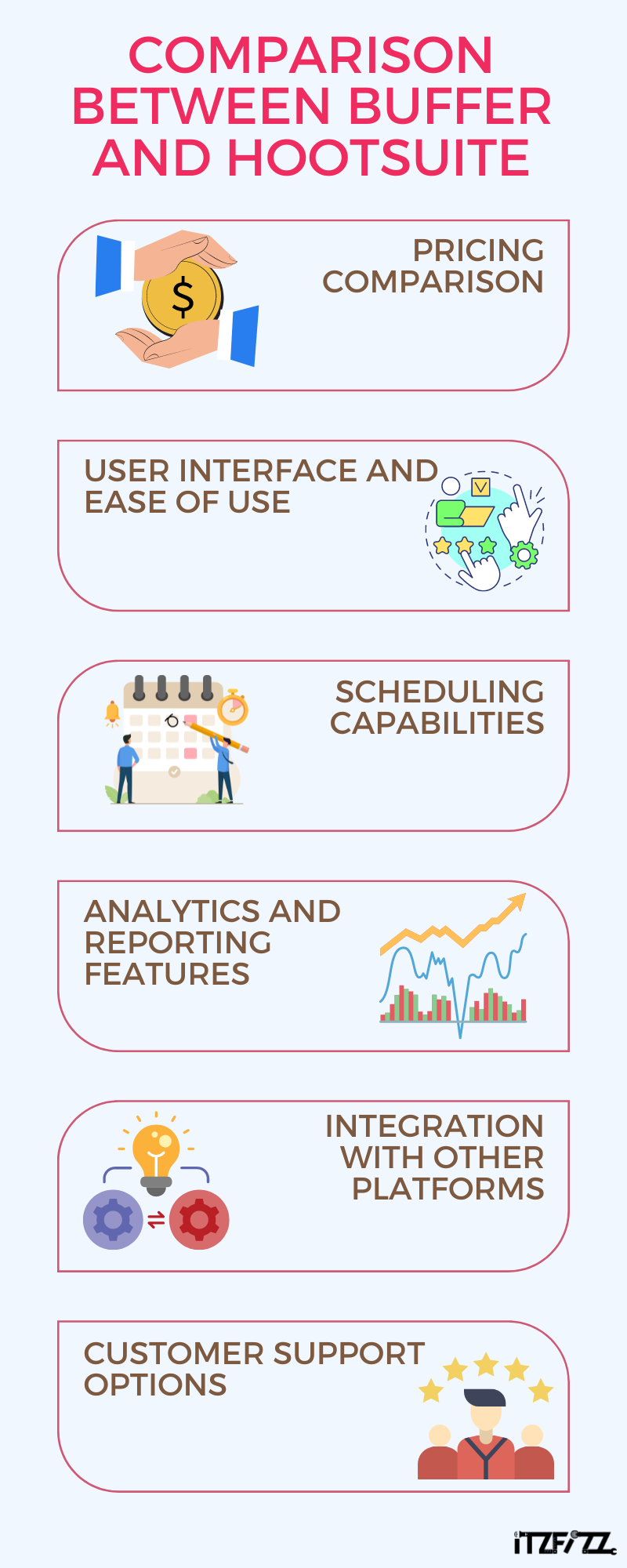
When choosing a social media management tool, it’s crucial to consider how the features, pricing, and overall user experience of platforms like Buffer and Hootsuite align with your needs. This section provides a detailed comparison of these two leading tools, focusing on key aspects that influence decision-making.
- Pricing Comparison
Buffer: Known for its affordability, Buffer offers a free plan for up to 3 channels, with 10 scheduled posts per channel and one user. Paid plans are priced per channel: Essentials starts at $5 per channel per month, and Team, which adds unlimited users and approval workflows, starts at $10 per channel per month. Both come with a 14-day free trial.
Hootsuite: Hootsuite’s plans are more expensive and priced per user. Standard starts at $99 per user per month on annual billing and covers 10 social accounts, followed by Professional, Advanced and a custom-priced Enterprise plan. There is no free plan, but the self-serve plans come with a 14-day free trial.
- User Interface and Ease of Use
Buffer: Buffer’s interface is clean and intuitive, designed for ease of use. Users can quickly navigate through the platform, making it ideal for those who prefer simplicity and efficiency in their social media management.
Hootsuite: Hootsuite offers a more complex dashboard that provides a comprehensive overview of your social media activity. While feature-rich, the learning curve can be steep for new users. However, it’s highly customisable, catering to users who need detailed insights and control over their social media strategies.
- Scheduling Capabilities
Buffer: Buffer simplifies the scheduling process, allowing users to queue social posts across different platforms. Its straightforward approach is perfect for users who need basic scheduling functionality without the complexity.
Hootsuite: Hootsuite offers advanced scheduling options, including bulk scheduling and the ability to auto-schedule social media posts for the times your audience is most likely to engage. Its robust scheduling features are suited for users with more complex posting schedules and those managing multiple accounts.
- Analytics and Reporting Features
Buffer: Buffer provides basic analytics that cover engagement metrics and post-performance. While useful for individuals and small businesses, larger organisations might find these insights limited.
Hootsuite: Hootsuite excels in analytics, offering in-depth reports that analyse performance across multiple platforms. Its comprehensive analytics are ideal for businesses that rely on data-driven decisions to refine their social media strategies.
- Integration with Other Platforms
Buffer: Buffer supports essential integrations with popular social media platforms and some third-party apps, focusing on streamlining the posting and scheduling process.
Hootsuite: Hootsuite says it offers over 100 apps and integrations, including CRM systems, content management tools, and more, making it a versatile choice for businesses that use a wide range of software solutions.
- Customer support options
Buffer: Buffer offers support via email, along with a comprehensive help centre and community forums for self-service assistance.
Hootsuite: Hootsuite provides more extensive support options, including live chat, phone support, and a help centre, catering to businesses that require immediate assistance.
Is Buffer or Hootsuite Better for Your Business?
Deciding between Buffer and Hootsuite boils down to your specific needs, budget, and the complexity of your social media strategy. Buffer is an excellent choice for those seeking simplicity, affordability, and basic functionality. In contrast, Hootsuite is suited for users who need advanced features, comprehensive analytics, and the ability to scale their social media efforts.
Selecting the ideal social media management tool is a pivotal decision that can significantly impact your online presence and engagement. Both Buffer and Hootsuite offer unique advantages, but the best choice depends on various factors, including your specific needs, preferences, and the scale of your social media operations. Here’s a guide to help you make an informed decision.
Factors to Consider When Making a Decision
- Budget Constraints: Assess your financial resources. If you’re a small business or an individual with limited funds, Buffer’s affordability and basic plan might be more appealing. For larger organisations or those requiring advanced features, Hootsuite’s higher price point could be justified.
- Ease of Use: Consider the learning curve. If you prefer a straightforward, user-friendly interface for quick scheduling and analytics, Buffer’s simplicity will suit you well. For those who need a comprehensive overview of multiple accounts and streams, Hootsuite’s detailed dashboard, despite its complexity, might be the better option.
- Feature Requirements: Identify the features that are most important to you. If basic scheduling content and analytics fulfil your needs, Buffer offers a clean, efficient solution. However, if you require in-depth analytics, advanced scheduling options, and extensive integrations, Hootsuite’s robust platform is more appropriate.
- Team Collaboration: Consider the size of your online marketing team and your collaboration needs. Buffer provides basic collaboration features suitable for small teams. In contrast, Hootsuite offers more sophisticated team collaboration and management features, ideal for larger teams with complex workflows.
- Social Media Strategy Complexity: Evaluate the complexity of your social media strategy. For straightforward strategies focusing on content scheduling and light engagement, Buffer is sufficient. For more complex strategies involving detailed analytics, social listening, and engagement across multiple platforms, Hootsuite is better equipped.
- Integration Needs: Assess the need for integrations with other tools and platforms. If you rely heavily on other software for CRM, content management, or customer service, Hootsuite’s extensive integration capabilities make it a versatile choice.
Recommendations Based on Specific Needs and Preferences
For Individuals and Small Businesses: If you’re managing a few accounts and your primary goal is to maintain a consistent posting schedule without the need for advanced analytics, Buffer is highly recommended for its simplicity and cost-effectiveness.
For medium- to large-sized businesses or agencies: If you’re handling multiple social media accounts, require detailed analytics, and need to collaborate with a team on social media management, Hootsuite offers the comprehensive features and scalability necessary to support complex strategies.
For those prioritising engagement and social listening: If engaging with your audience and monitoring brand mentions are critical components of your strategy, Hootsuite provides superior tools for social listening and engagement across multiple platforms.
For budget-conscious users: If budget is a primary concern, Buffer’s free plans and affordable premium options present an excellent solution for effective social media management without a significant investment.
Conclusion
The selection of the right management tool is critical for success in the world of social media, where presence and interaction are paramount. Notable competitors Buffer and Hootsuite distinguish themselves with special benefits tailored to a variety of user needs. Buffer is highly recommended for individuals and small businesses, emphasising effective scheduling and analytics. It is known for its user-friendly web design and affordable price.
However, Hootsuite can accommodate a wider range of requirements because of its extensive feature set, which includes social listening, deep analytics, and numerous integrations. Choosing between Buffer vs Hootsuite is dependent upon several aspects, such as financial constraints, the elaborate nature of one’s social media plan, and personal preferences.
While both platforms offer ways to participate in social media more and implement strategies, picking one will promote digital productivity and effectiveness.