



Key takeaways
- Media management is the planning, creation, distribution and measurement of a brand's content across its channels.
- In marketing it centres on social media management: profiles, content, engagement, listening and reporting.
- You can manage social media in-house, through an agency or with DIY tools, depending on budget and skills.
- Complete, consistent profiles and a content calendar are the foundations of a well-managed presence.
- Track engagement, reach, clicks and conversions, and tie them back to business goals and ROI.
- A crisis communication plan helps you respond quickly when negative feedback spreads.
What Is Media Management?
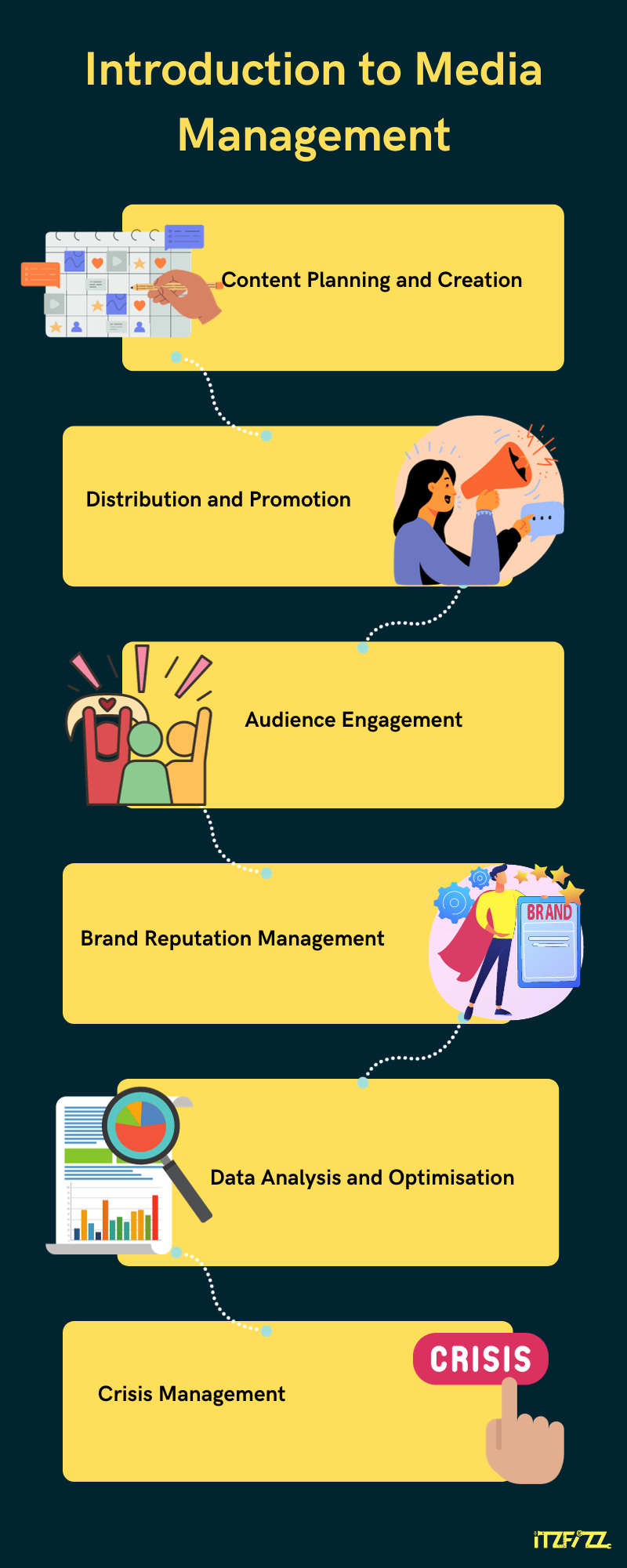
Media management is the planning, creation, distribution and measurement of a brand’s content across the channels it uses, from social media and its website to email and paid ads. In marketing it usually centres on social media management: running profiles, publishing content, engaging audiences and reporting results, so every channel supports the same business goals.
Media management has become essential for individuals, businesses and organisations of all sizes. At its core, media management involves the strategic planning, organisation, execution, and monitoring of an entity’s media assets and content across various communication channels, both online and offline.
Media management encompasses a wide range of activities and responsibilities, all aimed at achieving specific goals, which may include:
- Content Planning and Creation:
One of the fundamental aspects of media management is the planning and creation of engaging and relevant content. This social media content can take various forms, such as articles, videos, images, and interactive media. The goal is to create content that resonates with the target audience and communicates the intended message effectively.
- Distribution and Promotion: Once content is created, media management involves deciding how and where to distribute it. This could include social accounts, websites, email marketing, or traditional media outlets. Effective distribution strategies ensure that content reaches the right audience at the right time.
- Audience Engagement: Engaging with the audience is a crucial component of media management. This involves responding to comments, messages, and feedback from the audience, fostering a sense of community, and building relationships with followers or potential clients.
- Brand Reputation Management: Media management also covers keeping an eye on and controlling a person’s, a brand’s, or an organisation’s online reputation. This entails keeping a positive image and quickly responding to any unfavourable comments or crises.
- Data Analysis and Optimisation: To improve media strategies, social media managers often rely on data analysis tools to measure the performance of content and social strategy. Analysing metrics such as engagement rates, click-through rates, and conversion rates helps refine future strategies for better results.
- Crisis Management: In the age of social media, a crisis can escalate quickly. Social media managers are responsible for handling crises, mitigating damage, and communicating effectively during challenging times.
In the connected world of today, anyone hoping to make a significant difference must grasp media management. Gaining expertise in media management is crucial for anyone trying to improve their business’s online profile, increase their reach as a content provider, or optimise campaigns as a marketing professional.
Media Management vs Social Media Management vs Digital Asset Management
The term “media management” is used in several different ways, which is why search results for it can look confusing. This guide focuses on the marketing meaning.
| Term | What it covers | Typical owner |
|---|---|---|
| Media management (marketing) | Planning, creating, distributing and measuring a brand’s content across owned, earned and paid channels: website, social media, email, PR and ads | Marketing manager or agency |
| Social media management | Running social profiles day to day: content calendar, publishing, community management, social listening and reporting | Social media manager |
| Digital asset management (DAM) | Storing, tagging and controlling access to files such as images, videos, logos and brand guidelines so teams use approved versions | Marketing operations or brand team |
| Media management (industry) | Running media organisations such as publishers, broadcasters and streaming services, often taught as an academic subject | Media executives |
In practice, small and mid-sized businesses rarely separate these roles. One person or agency often plans the content, runs the social channels and keeps the asset library tidy. What matters is that every channel works from the same goals, brand guidelines and reporting. If you want help pulling it together, see how our social media marketing services work.
What Are the Benefits of Social Media Management?
Social media management is becoming increasingly valuable to both individuals and businesses due to the rise of online communication as well as developments in Internet marketing. These advantages are not just about the website but also have a significant impact on audience participation and brand success.
A few of the key advantages of social media management are being examined here.
- Enhanced Brand Visibility:
Social media platforms give your brand a platform to shine on a worldwide scale. Posting regularly and interacting with your audience raises awareness and recognition of your brand. - Improved Customer Engagement:
You can communicate directly and interactively with your audience through social media. It enables you to interact with potential clients or followers by starting discussions, answering questions, and developing relationships. - Audience Growth and Community Building:
Effective social media management helps you grow your online following and build a loyal community around your brand. This community can become advocates who share your content and recommendations.
4. Targeted Marketing and Advertising:
Social media sites include advanced targeting capabilities that let you target particular interests, behaviours, and demographics. This precision in modern marketing can lead to higher conversion rates.
- Cost-Effective Marketing:
Social media marketing can be less expensive than traditional advertising methods. Many digital platforms offer options for both organic (free) and paid advertising, giving you flexibility in your marketing budget. - Valuable Insights and Analytics:
Social media platforms provide robust analytics tools that help you track the performance of your content and marketing campaigns. You may improve your performance by refining your strategies with this data-driven approach. - Competitive Edge:
Having a well-managed social media presence can help you stand out from the competition in your field. It showcases your brand as forward-thinking, customer-focused, and active in the digital space. - Crisis Management and Reputation Repair:
Having a strong social media presence allows you to respond quickly to crises or negative feedback, which is a core part of online reputation management. - Increased Website Traffic and Conversions:
Social media can drive organic traffic to your website, blog, or e-commerce platform, increasing the chances of conversions and sales. - Market Research and Customer Insights:
Social networking sites are a great place to get opinions and thoughts. You can gather information on customer preferences, opinions, and trends to inform your business decisions.
You may get great returns on investment by integrating social media management into your whole marketing and brand strategy. It takes more than just publishing content to have a significant online presence, interact with your audience, and make use of the special opportunities that every platform presents.
What Are the Types of Social Media Management?

When it comes to managing your presence on social media, you have several options to consider. Each approach has its advantages and challenges, and the choice you make should align with your goals, resources, and expertise. Here are the primary types of social media management:
- In-House Management:
In-house social media management involves handling your social media presence internally within your organisation.
Here are some important things to think about:
– Advantages:
Direct control: You have direct control over your social media strategy, content creation, and engagement with the audience.
In-depth knowledge: Your team likely has a deep understanding of your brand, products, and services.
Cost-effective: It can be more cost-effective compared to outsourcing to an agency.
- Hiring a Professional Agency: A lot of companies decide to hire a digital marketing-focused professional agency to handle their social media accounts.
What you should know is as follows:
Benefits: Experience and expertise: Agencies are well-versed in social media marketing.
Scalability: They can adjust to changing requirements and manage campaigns of different sizes.
Time-saving: Outsourcing frees your staff to focus on essential company operations.
- DIY Management Tools:
For individuals or small businesses looking for a more hands-on approach, there are a variety of do-it-yourself social media management tools available. Some considerations include:
– Advantages:
Affordability: Many DIY tools offer free or cost-effective plans.
Ease of use: User-friendly interfaces make it accessible to those with limited technical skills.
Scheduling: These tools often include content scheduling features.
- Social media platforms:
Several social media sites are equipped with built-in tools and features to assist you in efficiently managing your online presence. These are a few well-known platforms:
Facebook and Instagram: These networks provide scheduling, insights and advertising options to help you manage your presence properly (our guide to Instagram management goes deeper).
X (formerly Twitter): This channel offers direct engagement for fast answers, scheduling capabilities and analytics.
LinkedIn and YouTube: YouTube provides video analytics and content scheduling (see our guide to YouTube management), while LinkedIn offers company pages with built-in analytics.
Other Platforms: You may investigate alternative platforms such as Pinterest, TikTok, or Snapchat, each with its distinct characteristics, according to your niche or target audience.
The choice between these types of social media management depends on your specific goals, available resources, and expertise. It’s essential to evaluate your needs and select the approach that best aligns with your objectives.
What Are the Essential Components of Social Media Management?
Effective social media management combines several components that work together to build a strong online presence, engage your followers and achieve your goals. Here are the essentials:
- Content strategy: A well-defined content strategy is the foundation. It sets the type of content you will produce, the topics you will cover and your posting schedule. Your content should resonate with your target audience and align with your brand’s messaging.
- Audience targeting: Identifying and understanding your target audience is pivotal. It helps you tailor your content and messaging to their needs and preferences, and social platforms offer a range of tools for audience segmentation and targeting.
- Content creation: High-quality content sits at the heart of any successful social media strategy. This includes text, images, videos, infographics and other multimedia elements, and it should be engaging, informative and visually appealing.
- Engagement and interaction: Social media is a two-way channel. Engaging with followers through comments, messages and conversations builds relationships and a sense of community.
- Monitoring and listening: Monitoring mentions and conversations about your brand or industry gives you valuable insights. Listening to feedback and addressing concerns promptly shows your commitment to customer satisfaction.
- Analytics and data analysis: Analytics tools let you track the performance of your posts. Metrics such as engagement rate, reach, click-through rate and conversion rate help you measure success and make data-driven decisions.
- Crisis management: Preparing for and responding to crises is an integral part of social media management. A crisis communication plan helps limit potential damage to your brand’s reputation.
- Adaptation and innovation: The social media landscape keeps changing. Successful social media managers stay up to date on industry trends, algorithm changes and emerging platforms, and adapt their strategies accordingly.
- ROI measurement: Ultimately, you should assess the return on investment (ROI) of your social media efforts. Analyse how social media affects your business goals, whether that is more sales, greater brand awareness or higher customer satisfaction.
Integrating these components into your strategy gives you a complete and effective approach. Social media management is not one-size-fits-all: tailor it to your specific objectives and audience.
How Do You Set Up Social Media Profiles and Pages?
Creating and optimising social accounts and business pages is a crucial step in effective social media management. These profiles serve as the online faces of your brand, making a strong first impression on your audience. Here’s how to set them up and optimise them:
1: Choose the Right Platforms:
Not every social networking site will be appropriate for your brand. Identify where your target audience is most active and focus your efforts on those platforms.
2: Profile Picture and Cover Photo:
Use high-quality, recognisable images for your profile picture, such as your logo or a professional headshot. Select a captivating cover image that embodies your company.
3: Complete Your Bio or About Section:
Write a concise and compelling bio that describes your brand, its values, and what you offer. Include relevant keywords to enhance discoverability.
4 Contact Information:
Ensure that your contact information, including website, email, and phone number, is accurate and easily accessible.
5 Consistent Branding:
Maintain consistency in branding across all platforms. To strengthen your brand identification, stick to the same colour palette, logo and brand voice.
6: Custom URLs:
Where possible, customise your social media profile URLs to make them easy to remember and share.
7: Verify social media accounts:
Some platforms offer verification badges for authenticity, often as part of a paid subscription. Consider getting your social media accounts verified to build trust with your audience.
8: Set Up Business Pages:
On platforms like Facebook and LinkedIn, create dedicated business pages with additional features, such as reviews and business hours.
9: Optimise for Search:
Incorporate relevant keywords into your profiles and posts to improve discoverability, and research them with free search engine tools.
10 Content Guidelines:
Provide guidelines for the type of content your brand will share to maintain a consistent brand voice and message.
11 Privacy Settings:
Review and adjust privacy settings as needed to control who can interact with your content and access your information.
12 Call-to-Action (CTA):
Use CTAs on platforms like Facebook to encourage users to take specific actions, such as visiting your website or contacting your business.
13 Monitor and Update:
Regularly review and update your profiles to reflect any changes in your brand, products, or services.
Creating compelling and professional profiles sets the stage for successful social media management. These profiles serve as the entry points for your audience, so it’s essential to make them engaging and turn them into potential customers.
Content Creation and Scheduling
Creating engaging and valuable content is at the core of effective social media management. Your content should resonate with your audience, provide value, and align with your brand’s messaging. Here’s how to approach content creation and scheduling:
1 Content Strategy:
Begin with a well-defined content strategy that outlines your goals, target audience, and content themes. This plan will direct your efforts in creating content.
2 Content Types:
Diversify your content by using a mix of formats, including text posts, images, short and long-form videos (our guide to YouTube marketing covers video in depth), infographics, polls and more. Audience segments respond differently to varied media.
3 Content Calendar:
To arrange and organise your posts ahead of time, make a social media content calendar. This helps maintain consistency and ensures you don’t miss important dates or events.
4 Quality Over Quantity:
Focus on producing high-quality content that resonates with your audience rather than flooding your feed with posts. Quality content often leads to better engagement.
5 Visual Appeal:
Posts with strong visuals, such as photos, short videos and clear graphics, are more likely to stop the scroll and capture your audience’s attention.
6 Storytelling:
Use storytelling in branding to create narratives that connect with your audience on a personal level. Share your brand’s journey, customer stories, and behind-the-scenes glimpses.
7 Call-to-Action (CTA):
Encourage user interaction by including clear CTAs in your posts. Whether it’s asking for comments, shares, or clicks, CTAs guide your audience’s actions.
8 Posting Times:
Analyse your audience’s activity patterns to determine the best times to post. Different platforms and audiences may have varying peak engagement times.
9 Content Repurposing:
Extend the lifespan of your content by repurposing it into different formats or revisiting evergreen topics with updated information.
10 Engagements with Followers:
Actively engage with your audience by responding to comments, asking questions, and participating in discussions related to your content.
11 Content Scheduling Tools:
Utilise content scheduling tools such as Buffer or Hootsuite (compared in our Buffer vs Hootsuite guide) to automate the posting process and maintain a consistent online presence.
12 Metrics and Analysis:
Use analytics tools to evaluate the effectiveness of your material regularly. Adjust your content strategy based on what works best with your audience.
Remember that the key to successful content creation is understanding your audience’s preferences and delivering content that addresses their needs and interests. A well-planned and executed content strategy contributes significantly to your social media management success.
Which Tools Help With Media Management and Reporting?
Effective social media management relies on tools and reporting mechanisms that provide insights into the performance of your strategies. These tools help you measure success, make data-driven decisions, and refine your approach. Here’s how to leverage them:
1 Analytics Platforms:
Most social media platforms offer built-in analytics tools that provide data on key metrics such as engagement, reach, impressions or views (Instagram replaced impressions with views in 2025) and click-through rates. Familiarise yourself with these platform-specific analytics.
2 Social Media Management Tools:
Make use of social media management tools such as Sprout Social, Buffer or Hootsuite; our roundup of social media marketing tools compares more options.
These social media management tools offer features for scheduling social media posts, managing multiple social media accounts, and tracking performance in one centralised dashboard.
3 Google Analytics:
If you’re driving traffic to your website through social media, integrate Google Analytics to monitor website traffic, conversions, and the behaviour of social media-driven visitors.
4 Social Listening Tools:
Employ social listening tools like Brandwatch or Mention to monitor brand mentions, keywords, and trends across social media. This can help you stay informed about what’s being said about your brand or industry.
5 Reporting Dashboards:
Make personalised reporting dashboards with Tableau or Google Data Studio. These dashboards provide you with a thorough overview of your social media performance by combining data from multiple sources.
- Keyword and Hashtag Tracking:
Track relevant keywords and hashtags to understand trending topics and discussions within your industry or niche. - Competitor Analysis:
Analyse the social media strategies of your competitors. Identify their strengths and weaknesses to refine your approach. - Monthly and Quarterly Reports:
Regularly generate reports summarising your social media performance. Highlight key metrics, trends, and insights. Use these reports to set goals and adjust your strategy. - Budget and ROI Tracking:
Monitor your social media budget and track the return on investment (ROI) for paid advertising campaigns. Adapt the amount of your budget according to performance.
By leveraging these social media management tools and reporting mechanisms, you can gain a deeper understanding of your audience, refine your strategies, and ensure that your social media management efforts align with your overarching goals.
Conclusion: Mastering Media Management
In the digital age, mastering media management is essential for individuals and businesses. This guide has explored the various facets, from content creation to audience engagement and data-driven decisions. High-quality content remains paramount, serving as the bridge between brands and their audiences. Understanding your audience, using data insights, and maintaining consistency is key.
Engagement is vital on the two-way street of social media. Listening to feedback, fostering relationships, and being adaptable to change are essential. Prepare for the unexpected with a crisis management plan. Remember that media management is a continual learning process, with evolving landscapes and emerging platforms.
By mastering media management, you can enhance your brand’s reputation, connect on a personal level with your audience, and drive towards your goals. This journey equips you to navigate the digital world effectively, making a lasting mark in media.
Thank you for joining us on this exploration. Please get in touch if you need help or have any questions. Happy media management!